
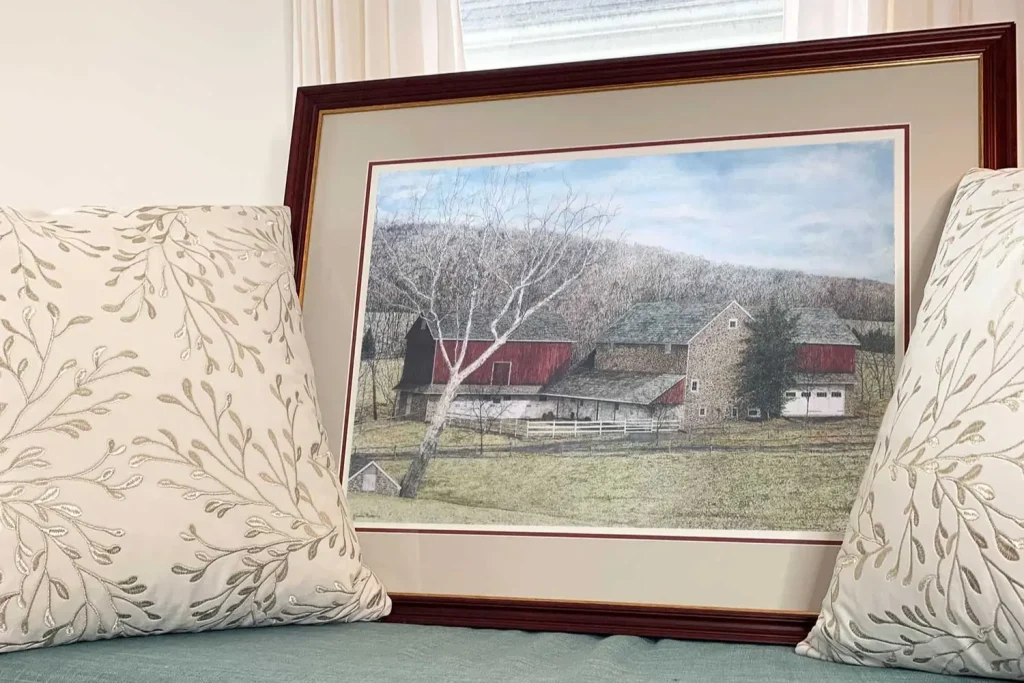
People often ask what the difference is between a giclée and a lithograph. Both are fine art prints, but they are made using very different printing processes and represent different periods of James Redding’s artistic career.
James’s giclées are printed on canvas and reproduce paintings from his later work. His lithographs are fine art reproductions printed on archival, acid-free paper with archival inks. They come from an earlier period of his career, when he primarily worked in watercolor with a more subdued palette.
The difference is not simply canvas versus paper. It is also about how the artwork was created, how it is reproduced, and where it fits within James’s artistic journey.
Key Takeaways
Both Are Fine Art Prints: Each reproduces the color, detail, and light of an original painting.
The Printing Process Is Different: Giclées are produced using a high-resolution inkjet printing process, while lithographs use a lithographic printing process.
The Materials Are Different: We print our giclées on canvas. Lithographs are fine art reproductions printed on archival, acid-free paper with archival inks.
They Come From Different Periods: James’s lithographs are from an earlier period of his career, when he primarily painted in watercolor with a more subdued palette. His giclées reproduce paintings from his later work, including his acrylic paintings.
Editions and Signatures Differ: Lithographs may be limited or open editions, and James signs them. Giclées are printed to order.
Price Points Differ: Lithographs are the more affordable option, while giclées cost more depending on size.
Still deciding? The studio would gladly help. Please get in touch.
What a Giclée Is
A giclée is a modern fine art print made using a high-resolution inkjet printing process. The technique allows for fine detail and helps capture the subtle color, light, and character of the original painting.
At the studio, we print our giclées on canvas. The canvas is stretched over wooden bars and gallery wrapped, so it arrives ready to hang without the need for glass or additional framing.
Giclées are printed to order and are available in a range of sizes. You can see the current selection on the giclées page.
What a Lithograph Is
Lithographs are printed as a run rather than one at a time, which is why the studio can ship them from stock while a giclée has to be made for you.
James’s lithographs are fine art reproductions printed on archival, acid-free paper with archival inks. The studio offers both limited and open editions. For limited editions, James signs and numbers each print, in runs of 500, 550, or 750. For open editions, he signs each print without numbering.
Lithographs remain a more affordable way to own a signed reproduction of James’s artwork. See the current selection on the lithographs page.
The Giclée vs Lithograph Differences That Matter
The difference starts with how each print is made.
A giclée is produced using a modern, high-resolution inkjet printing process. James’s giclées are printed on canvas and reproduce paintings from his later career.
Lithographs are created using a lithographic printing process and printed on archival, acid-free paper with archival inks. James’s lithographs come from an earlier period of his career, when he primarily worked in watercolor and used a more subdued palette.
There are also differences in editions, signatures, availability, and price. Lithographs may be limited or open editions and are signed by James, while giclées are printed to order.
How Long Each Takes to Arrive
This one surprises people. The studio prints lithographs in advance, so they ship within one to two business days.
Giclées are printed to order, which means they take roughly two weeks to create before shipment. The wait allows each piece to be produced specifically for the size and canvas you choose.
If you need something on your wall quickly, that may be an important factor in deciding between a giclée and lithograph.
Which One Suits You
Choose a lithograph if you appreciate the lithographic printing process, a signed edition, and a lower price point. Limited editions also offer a numbered print for collectors.
Choose a canvas giclée if you want a reproduction of one of James’s paintings on canvas, with the color, detail, and character of the original artwork.
Still weighing a print against an original? Our guide to originals and prints covers that choice, and what a giclée print is goes deeper on the process.
Either way, the studio can advise on size and framing. Just send a note with the scene you have in mind.
Frequently Asked Questions
What is the main difference between a giclée and a lithograph?
A giclée is a modern fine art print made using a high-resolution inkjet printing process. James and Mary print their giclées on canvas. A lithograph is created using a lithographic printing process and printed on archival, acid-free paper with archival inks.
Which should I choose, giclée vs lithograph?
It depends on what you’re looking for. A lithograph may appeal to collectors who appreciate signed editions and the lithographic printing process. A canvas giclée offers a reproduction of James’s later paintings on canvas and is designed to capture the color, detail, and character of the original artwork.
Is a giclée better quality than a lithograph?
Neither is simply “better.” They are made using different printing processes and represent different periods of James’s artistic career. The right choice depends on the artwork, format, and qualities that matter most to you.
Which costs more, a giclée or a lithograph?
Lithographs cost less, while giclées cost more depending on size. Both offer an opportunity to own a reproduction of James’s artwork at a lower price than an original painting.
How soon will my print arrive?
Lithographs ship within one to two business days because the studio prints them in advance. Giclées are printed to order, so allow roughly two weeks for creation before shipment.