
A collector stood in front of a landscape she had already decided she loved. She could take the original home, the actual surface the artist had worked on, or she could take a print and spend the difference on framing and a second piece for the hallway. What stopped her was not the money. It was the original paintings vs prints question underneath it, and the quiet worry that choosing the print meant settling.
It does not. Neither option wins in any general sense, which is more freeing than most people expect to hear.
An original is one of a kind and carries the texture and presence of the artist’s own hand. A print carries the same image and the same feeling into your home at a gentler price. Which one suits you comes down to what you want from the piece, where it will hang, and what you can comfortably spend. You can see both on the originals and prints pages.
Key Takeaways
Originals Are One of a Kind: The artist painted that single surface by hand, and no print can copy its texture or presence.
Prints Make Art Affordable: A quality print holds the colour, detail, and light of the original at a far lower price.
Your Situation Decides It: What you want, where it hangs, and what you can spend all point to one or the other.
Prints Come in Three Forms: Giclées, signed lithographs, and matted small works each suit different rooms and budgets.
You Can Have Both: Original paintings vs prints is rarely a one-time choice, since most collectors mix them over the years.
If you would like help choosing, please get in touch.
What an Original Painting Offers
An original is the actual painting. The artist worked that one surface directly and will not make it again, so you own the only one there is. For a lot of collectors that alone settles it.
Then there is presence. Up close you see the brushwork, the build of the paint, the way real light moves across a real surface rather than a printed one. Redding’s work leans on careful realism and on light, which means it repays looking twice. People tell us they notice details months after hanging something.
Originals also hold their value in a way prints are not meant to. They are genuine collectibles. So if the plan is to keep a piece, or hand it on eventually, an original matches that intention properly. Commissions go further again, and the studio paints custom scenes and portraits to order.
What a Print Offers
A print is not a poster, and it is worth saying that plainly because the word carries baggage. A good print holds the colour, the detail, and the light of the original. The image you love arrives intact, at a different price.
Affordability is the obvious advantage, and it matters more than people like to admit. Not every wall in a house deserves a significant investment. Prints let you fill more rooms, decorate the spaces you would otherwise leave bare, and start now rather than in five years. Choosing one is not loving art less. It is being practical about a house that has eleven walls and one budget.
Some rooms genuinely suit a print better anyway. A busy hallway. A child’s room. Anywhere you would rather not worry. Printmaking has served collectors this way for centuries.
The Print Options and Which Suits Your Space
Prints differ in material, presentation, and price, and three options cover nearly every situation.
Giclées are printed on canvas, stretched over wooden bars an inch and a half deep and gallery wrapped, ready to hang the moment they are out of the box. Because they reproduce his acrylic paintings onto the same surface the originals were painted on, they carry a painting’s texture and presence across a room. Each one is made to order, so allow about two weeks. There is a full post on giclée prints if you want the detail.
Lithographs come from an earlier period of his career, when he painted in watercolour rather than acrylic and worked in a more subdued palette. They are printed as a run on archival, acid free paper, and the artist signs every one and numbers the limited editions. They are a separate body of work rather than the same pictures offered more cheaply, and they remain the gentlest way to own something with his hand on it.
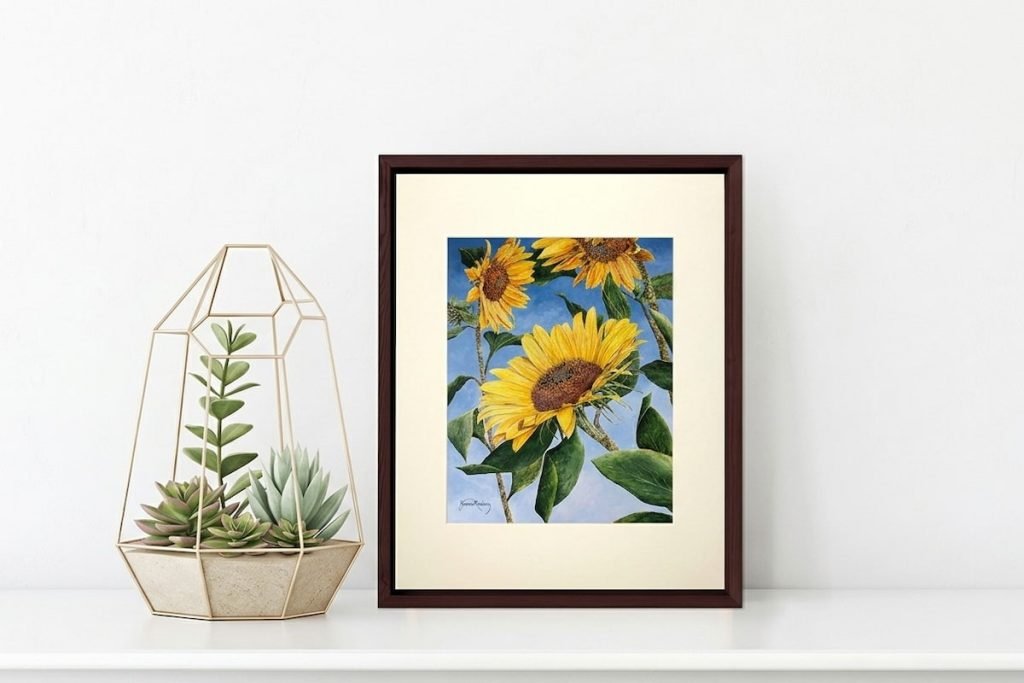
Small works are matted prints that fit a standard eleven by fourteen frame, so custom framing never enters into it. They suit small rooms, gallery walls, and gifts.
Settling the Original Paintings vs Prints Question
Three honest questions usually settle the original paintings vs prints choice.
What do you actually want from it? If you want a singular work with the artist’s hand in it, something to keep or pass on, buy the original. If you want the image and the feeling at an easier price, a print will serve you beautifully and you should not think twice.
Where will it hang? A focal wall you walk past every day justifies an original or a canvas giclée. A hallway or a spare room does not, and there is no shame in saying so.
And what can you spend, honestly? Treat that as a guide rather than a limit. There is something worth owning at nearly every level.
Most collectors do not choose only once anyway. They start with a print or two, live with them, and add an original when the right piece finally meets the right wall. A home fills with art over years, not in one afternoon. If you want the pieces to sit quietly together, our guide to art for a calm home may help. And if you would like a second opinion, please reach out or join the Collector List to see new work as it appears.
Frequently Asked Questions
Is an original painting worth more than a print?
Yes. An original is a unique work by the artist, so it holds lasting collectible value that a print does not. A print exists to bring the image and feeling into your home affordably. Both are worthwhile, since they simply serve different purposes.
How do I decide, original paintings vs prints?
Ask what you want from the piece, where it will hang, and what you can comfortably spend. Originals suit a focal wall and a piece you intend to keep. Prints suit busy rooms, tighter budgets, and anyone who wants to start now.
Are prints good quality, or just posters?
Quality art prints go far beyond posters. Giclées spray pigment inks onto canvas at very fine resolution, and they hold the colour, detail, and light of the original. Lithographs use archival paper and archival inks, and the artist signs each one.
What is the difference between a giclée and a lithograph?
A giclée is sprayed with pigment inks onto canvas and made to order. A lithograph comes on archival paper, ships from stock, and carries the artist’s signature. The work differs too, since the lithographs reproduce watercolours from earlier in his career with a more subdued palette, while the giclées reproduce his acrylic paintings. The two collections contain different images.
How much do original paintings vs prints cost?
Matted small works start at $49, and signed lithographs run $75 to $125. Giclées span roughly $195 to $795 depending on size. Original paintings run from about $695 to $2,450.
Can I commission an original painting?
Yes. The studio paints custom scenes and portraits to order, and it handles each commission personally. You end up with a one-of-a-kind piece made for you. Reaching out through the contact page is the best way to start.