
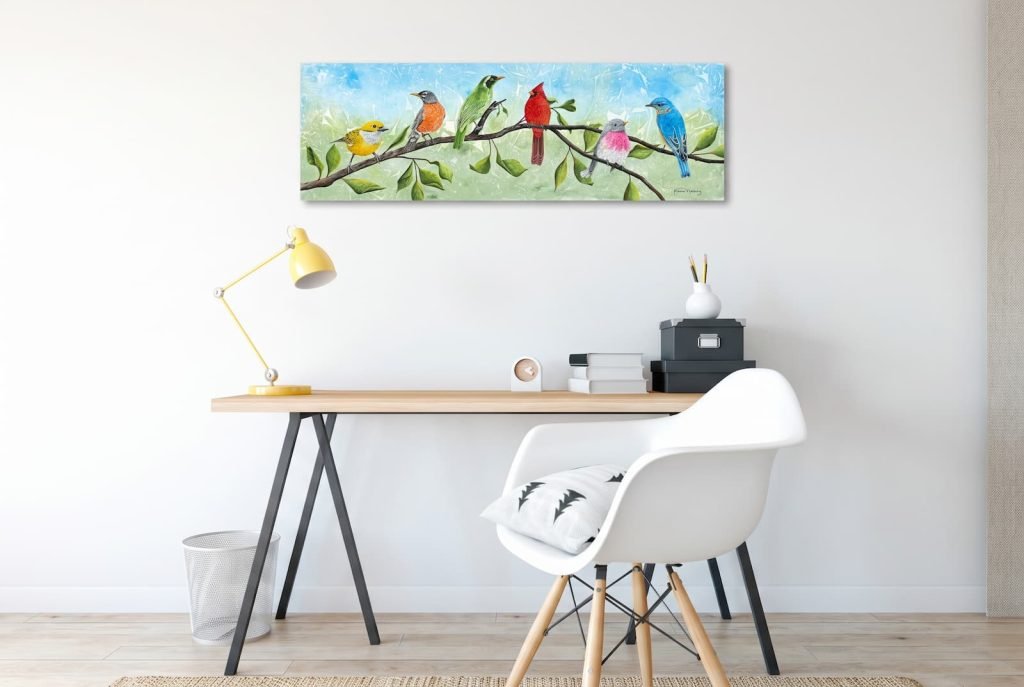
A man moved into a new house and could not settle in it. Everything was finished. New paint, furniture in the right places, nothing obviously wrong. It just felt restless, in the way a hotel room does. He hung one small landscape in the entry, his first piece of art for a calm home, and the whole hallway changed. Nothing else moved. Only the picture.
Art for a calm home does that. The right piece slows you down before you have even taken your coat off, because it gives the eye somewhere gentle to land, and the rest of the room follows.
None of this is complicated. It does take a little thought, though, and mostly in places people do not expect.
Key Takeaways
Nature Subjects Rest the Eye: Fields, water, and birds ask nothing of you, which is why they suit quiet rooms.
Light Sets the Mood: Soft morning or late-day light reads calm, while harsh light reads busy.
Echo the Room’s Colours: One shared tone between painting and room is usually enough to make a piece belong.
Leave Space Around the Work: A calm piece needs breathing room, so one good painting often beats three.
Begin With a Single Room: Start with the entry or bedroom, live with it, then let your eye guide the next step.
If you would like help choosing art for a calm home, you are warmly invited to contact the studio.
Why Nature Scenes Settle a Room
Nature is simply the easiest subject to live with. A field, a stretch of water, a bird on a branch: none of it asks anything of you. It rests there, and after a moment you rest with it.
Researchers have a name for this, attention restoration theory, and they have been studying it for decades. Most of us feel it long before we could explain it. You know the difference between a room that lets you breathe and one that keeps tapping you on the shoulder.
Which is why the landscapes and birds here work as well as they do at home. They hold the feeling of a morning walk and keep it on your wall through February.
Light Matters More Than Subject
Two paintings of the same field can feel like different countries. Light is the reason.
Soft, low light reads as calm. Hard midday light reads as busy, even when the subject is a quiet meadow. So look at the light before you judge the scene. Early morning and late afternoon are almost always the peaceful ones, and warm light tends to flatter a room because it echoes the lamps you switch on at six.
This happens to be the part the artist cares about most. Light is both the inspiration and the challenge in his work, which the about page goes into.
Choose a Palette That Agrees With the Room
Art for a calm home rarely fights the room it lives in. It echoes what is already there. Greens, soft blues, warm neutrals, muted golds: these sit easily beside almost any furniture.
That does not mean matching your sofa. Please do not match your sofa. Look instead for one or two colours in the painting that already appear somewhere in the space, in a cushion, a rug, the wood of a table. One shared tone is usually enough to make a piece feel like it was always meant to be there.
Florals do this beautifully in bedrooms and bathrooms. The florals pages show how much softness a single stem can carry.
Give Art for a Calm Home Room to Breathe
Placement does half the work, and it is the half people skip.
A calm painting on a crowded wall stops being calm, because the eye has nowhere to rest. So leave space around it. One considered piece will usually beat three competing ones, especially in a small room. If you do group things, keep the spacing even and the frames related to each other.
Height catches everyone out. Hang the centre of the work at roughly eye level, which is lower than instinct suggests. Above a sofa or console, leave about a hand’s width of wall between the furniture and the frame.
Where Calm Art Earns Its Keep
Some rooms repay this more than others.
Entries set the tone for the whole house, so a peaceful piece there does a lot of quiet work. Bedrooms come second, since the last thing you look at before sleeping has more influence than it should. Home offices deserve a mention too, because a window onto a quiet field helps enormously on a hard afternoon and costs you no floor space at all.
Hallways and stair walls are the easy wins. Smaller pieces suit them, and the matted small works fit a standard frame with no custom framing to arrange.
Start Small If You Are Unsure
There is no need to furnish every wall at once. Begin with one room and one piece, then live with it for a few weeks. Your eye will tell you what the house wants next, and it is usually right.
Prints make this easy. A giclée or a matted print lets you test a subject and a scale before committing to anything, and what a giclée print is explains how they are made. Our guide to originals and prints covers the wider choice. If you would rather build slowly, starting with a piece that genuinely speaks to you is a good place to begin.
Would you like a second opinion on a piece or a wall? Please contact the studio, and we can think it through together.
Frequently Asked Questions
What kind of art makes a home feel calm?
Nature scenes tend to work best, especially landscapes, water, florals, and birds. Soft light and a muted palette matter just as much as the subject. Busy, high-contrast images have their place, though they rarely quiet a room.
Where should I hang art for a calm home?
Entries, bedrooms, home offices, and hallways benefit most. Hang the centre of the piece at roughly eye level, which is often lower than people expect. Above furniture, leave a hand’s width of wall between the frame and the top of the sofa or table.
What colours are most calming in a painting?
Greens, soft blues, warm neutrals, and muted golds sit easily in most homes. Rather than matching your furniture, look for one or two colours the painting shares with the room. That single echo is usually enough.
Should I choose one large piece or several small ones?
One considered piece usually feels calmer, since crowded walls give the eye nowhere to rest. Groupings can work well if the spacing is even and the frames relate to each other. In small rooms, restraint tends to win.
Are prints good enough for this, or do I need an original?
Prints work beautifully. A giclée or matted small work brings the same image and feeling at a much lower cost, which also lets you test a subject before committing. Originals reward a focal wall you look at every day.