
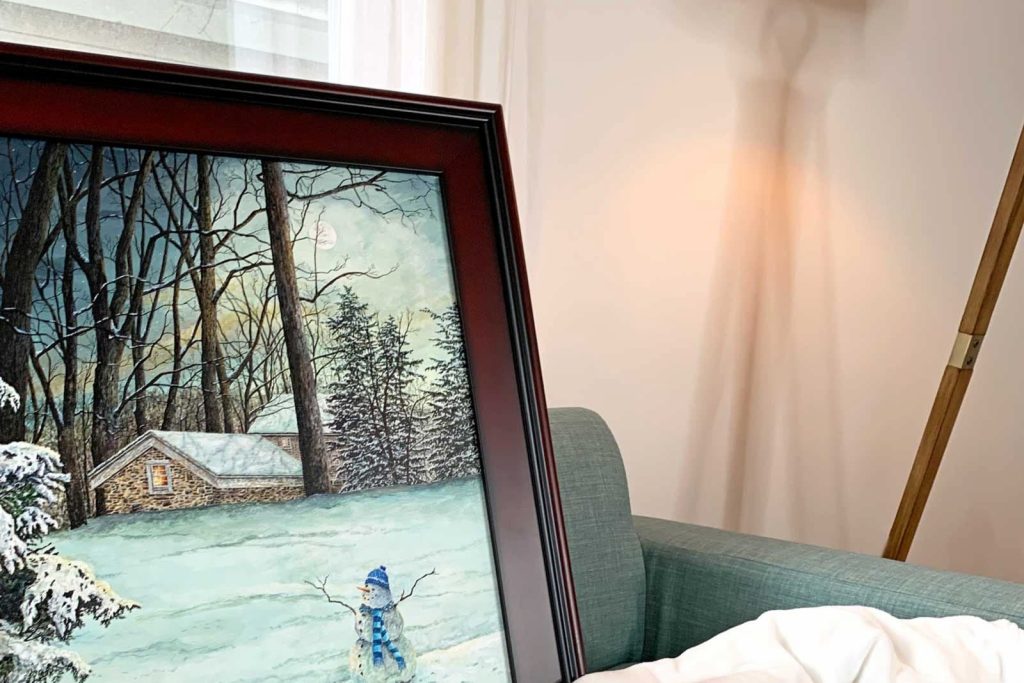
A woman once wrote in to ask whether she could commission a painting of the farm where she grew up. The barn had come down years before. All she had were a handful of photographs, most of them slightly out of focus, and a very clear memory of how the light came across the top field at about seven in the morning. She apologised twice in the email for asking something so odd.
It was not odd at all. It is close to the most common request the studio gets.
When you commission a painting you are asking an artist to make something new, for you, of a subject you choose. A house, a stretch of land, a garden, a bird, a face. The studio handles each one personally, and what you end up with exists nowhere else in the world.
People still hesitate, though, and usually for the same three reasons: they do not know how to ask, what it will cost, or how long they will be waiting. So here is the whole thing, start to finish.
Key Takeaways
A Commission Is a Custom Original: You ask the artist to paint your subject, so the finished work exists nowhere else.
It Starts With a Conversation: The first step is a friendly talk about your idea, not a contract or a deposit.
Price Follows Size: Size drives the cost, and you always know the figure before any work begins.
You See Progress Along the Way: The studio shares updates, so small changes happen early rather than late.
Personal Subjects Suit It Best: A home, a piece of land, or a portrait is where a commission truly earns its place.
Ready to commission a painting of your own? You are warmly invited to reach out to the studio.
What It Means to Commission a Painting
A commission is just a custom original. Rather than choosing from the finished work on the originals page, you start a conversation, and the artist paints your subject in his own style.
Painters have worked this way for centuries. Someone wants their house, their land, their grandmother, and they ask.
The subjects that come in are almost always personal. The house where the children grew up. A particular tree. A bird that shows up on the same fence post every spring. Portraits are welcome too, and there are examples on the portraits page.
Step One: The First Conversation
Every commission starts with a talk, not a contract.
You write in through the contact page and describe what you have in mind. Mary handles this side of the studio, so a person answers, not a form. Nothing is fixed at this stage and no money changes hands.
You describe the idea. The studio tells you honestly whether it suits the work, because some subjects sit beautifully in this style and others really do not. Better to find that out in week one than week six.
Bring whatever you have. Photographs help most, and the imperfect old ones are often more useful than you would think. Notes help too. What season it was, what time of day, what the place felt like to stand in.
Step Two: Size, Price, and Timing
Once the idea is settled, the practical questions follow.
Size comes first, because size drives both the cost and the presence of the finished piece. Something small suits a hallway. Something large will quietly take over a room, which may be exactly what you want.
A commission is priced in a similar range to the originals already on the site, with the final figure depending on size and complexity. You will know that number before anyone picks up a brush.
Timing depends on the subject and on what else is on the easel. Careful realism takes as long as it takes, since the detail is rather the point. You get an honest window rather than a cheerful promise.
Step Three: The Painting Itself
Then the work starts, and the first stage of it involves very little paint.
The artist tends to picture the finished piece before beginning, so the early days are mostly planning. Light gets particular attention, because light is what decides whether a scene feels like a summer morning or a cold afternoon.
You are not left in the dark while this happens. The studio sends progress along the way, which is not just courtesy. A small change is easy in week two and awkward in week six.
Most people are surprised by how much arrives right at the end. The final passes bring the texture and the depth, and the small quiet marks that make a place look like itself.
Step Four: Delivery and Framing
When the painting is done, the studio arranges delivery. Some originals arrive framed and others come ready for a frame of your choosing. Worth reading the shipping and returns notes before you order.
Give the frame some thought. A simple one usually serves a realistic landscape better than something ornate, which tends to compete with the picture rather than hold it. The studio will happily advise.
After that it is yours. Hang it where the light is kind and, more importantly, where you will actually walk past it every day.
Is a Commission Right for You?
Not everyone needs to commission a painting, and there is no sense pretending otherwise.
If you already love a scene the artist has painted, buying it is simpler and cheaper. The prints pages carry the same images at a fraction of the cost, our guide to originals and prints covers that choice, and what a giclée print is explains the print versions themselves.
But some subjects no catalogue will ever hold. A specific farm. The house you grew up in. A face. When the place matters more than the picture, a commission is the only honest answer.
When you are ready to talk it through, contact the studio. It begins with nothing more than a conversation.
Frequently Asked Questions
How do I commission a painting?
Start by contacting the studio and describing your idea. Send any photos you have, along with notes about the season, light, or feeling you want. The studio then confirms whether the subject fits, agrees a size and price with you, and begins once you are happy.
How much does it cost to commission a painting?
Original paintings from the studio run from about $695 to $2,450, and commissions sit in a similar range. Size is the main factor, though detail matters too. You always receive the final price before any painting starts.
How long does a commission take?
It depends on the size and the subject, plus the studio’s current schedule. Detailed realism cannot be rushed, so the studio gives you an honest window at the start rather than a quick promise.
Can I commission a portrait?
Yes. Portraits are welcome alongside landscapes, homes, and nature scenes. The portraits page shows examples of this work, and the process follows the same friendly steps.
What if I only have old photos?
Old or imperfect photos are usually enough. Artists work from reference all the time, and memory helps fill the gaps. Simply share what you have and describe what you remember.