
In October, a familiar road can suddenly become the prettiest part of your day. Leaves gather along the edges. Trees you barely noticed in August turn gold or red. For a moment, the afternoon light makes you want to slow down and look a little longer.
Then the light changes. A windy afternoon scatters the leaves, or the next time you pass, the branches are nearly bare. Part of what makes autumn beautiful is knowing that the scene will not stay exactly as it is.
Autumn paintings give that fleeting feeling somewhere to live. A woodland path, a softly glowing hillside, or a farm beneath an evening sky can become a familiar presence at home, long after the season outside has moved on.
James Redding’s autumn work offers several ways to experience the season. Some paintings draw you toward the color beneath the trees. Others invite you to pause over the sky, the changing light, or the quiet relationship between a building and the landscape around it.
Key Takeaways
- Look beyond the leaves. Light, atmosphere, and composition help give autumn paintings their lasting appeal.
- Choose the feeling you want to bring home. A woodland path and an open farm landscape can create very different impressions.
- Autumn art can stay on display all year. Consider how the painting works with your room and what you enjoy about it.
- Compare the artwork’s dimensions with your wall. Measure before choosing a piece, especially for a prominent space.
- Check individual listings. Format, size, price, and availability vary by artwork.
Why Autumn Makes Us Stop and Look
Autumn changes places we already know. A wooded trail becomes brighter underfoot. A field feels more open as the trees thin out. An ordinary bend in the road becomes somewhere you wish you had time to stop.
That familiarity matters. You do not need to have visited the exact place in a painting to recognize something in it. A country lane might remind you of weekend drives. A barn may bring back a place you knew growing up. A forest path can recall the simple pleasure of walking without a schedule.
The connection can be personal without being easy to explain. Sometimes a painting holds your attention because its colors suit the room. Sometimes it feels like somewhere you remember, even when you cannot name the place.
When choosing autumn art, that response is a useful starting point. Notice which scene makes you want to stay with it.
There Is More to Autumn Paintings Than Fall Color
Red and gold foliage may catch your eye first, but spend a little longer with a painting and other details begin to matter. Where does the light fall? What stays in shadow? Does your eye follow a path, rest on a building, or move toward an opening in the trees?
Those relationships give the color somewhere to belong. A bright passage can feel more luminous beside a darker one. An open stretch of sky can give a busy landscape room to breathe. A quieter area can make a small detail worth noticing.
For viewers, this is part of the pleasure of living with art. The first impression brings you closer. The smaller discoveries give you reasons to look again.
A Woodland Path You Can Return To
There is something inviting about a trail disappearing into the trees. It offers a direction without asking you to hurry. Your eye follows it into the scene, wondering what might be around the next bend.
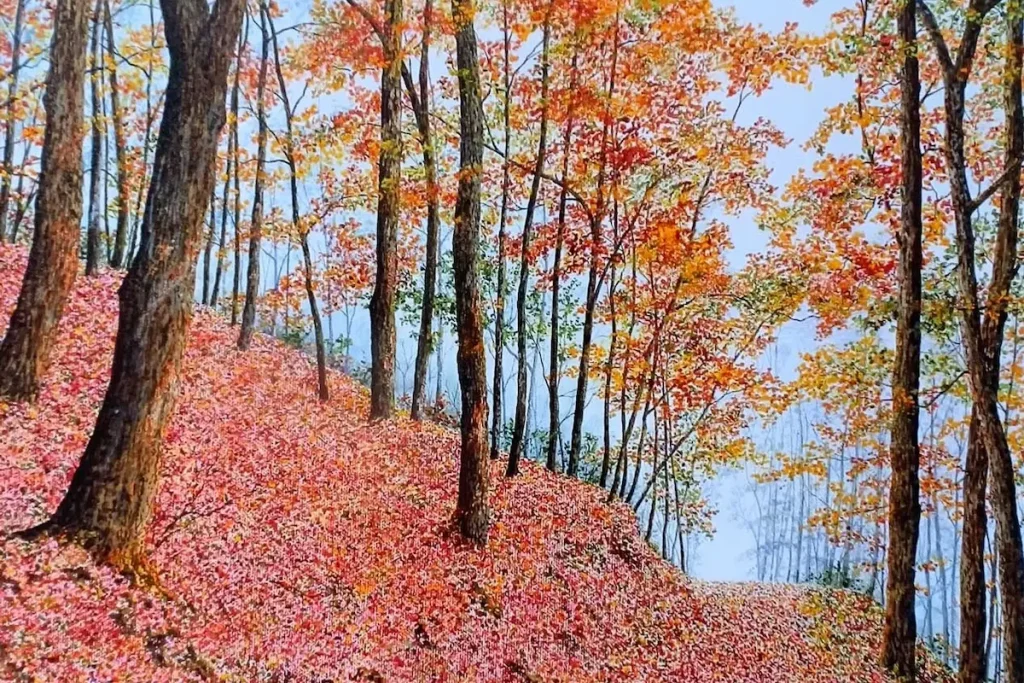
In Autumn’s Red Carpet, red leaves cover a softly lit forest path. The original is a 30-by-40-inch acrylic painting on canvas, giving the woodland scene a substantial presence.
The leaves beneath the trees are part of the invitation. They suggest the experience of being there, looking down the trail and taking in the season at walking pace.
If you are drawn to woodland paintings, consider what holds your attention. It might be the sense of shelter beneath the canopy, the depth of the path, or the color gathered along the ground. Those details can help you choose a scene that feels personal.
When the Autumn Sky Becomes the Main Event
Autumn is also a season of looking up. An evening sky can change the feeling of a whole landscape, turning an ordinary field or farm into something you want to remember.
In Autumn Hues, trees frame views of a colorful sky, while a barn occupies a small corner of the scene. This 24-by-36-inch original acrylic on canvas brings together the openness of the sky and the familiar presence of a rural building.
Golden Harvest explores another evening mood, with sunset colors meeting the approaching night over a farm scene.
For someone who loves open country, these subjects may offer a different connection than a wooded trail. The appeal might be the distance, the sky, or the feeling of a day drawing to a close.
Choosing Autumn Art for Your Home This October
October is a natural time to notice autumn paintings, especially when the season outside has made you more attentive to its colors. Before choosing a piece, think about where you will see it and what you want to enjoy about it.
Start With the Scene
Ask yourself which landscape you would like to return to each day. A forest path might suit your love of walking. A farm scene might connect with family memories. A softly lit view may appeal simply because it makes you pause.
A painting does not need a dramatic story behind it to be meaningful. Enjoying the scene is enough.
Consider the Room’s Existing Colors
You do not have to match every color in the painting to your furnishings. Instead, look for a relationship that feels comfortable. A warm tone might connect with wood furniture, or a quieter passage might work well beside neutral fabrics.
Think about the artwork as a whole. Strong foliage can bring energy to a simple room. A softer landscape may suit a space where you prefer a gentler visual presence. Neither choice is automatically better; it depends on the room and your taste.
Measure the Wall Before Choosing a Size
Online images can make it difficult to judge scale. Check the listed dimensions and mark them out on your wall with removable painter’s tape, following the tape manufacturer’s guidance for your wall finish.
Then step back to the places where you normally sit or stand. Consider the nearby furniture, windows, and other artwork. This helps you picture how much space the piece will occupy before making a decision.
Think About Where You Will Enjoy It Most
A prominent living room wall is one option, but it is not the only one. A reading corner, an entryway, or the wall you see from your favorite chair may give you more opportunities to enjoy the artwork.
The best location is often somewhere the painting becomes part of everyday life.
Can Autumn Paintings Stay Up All Year?
Yes. If you enjoy an autumn painting in October, you do not have to put it away when winter arrives.
The useful question is whether you like living with the scene. A painting can remain meaningful because it recalls a place, holds a favorite color, or gives your eye somewhere pleasant to rest.
Autumn’s Soft Light, for example, centers on changing leaves and gentle light. For someone drawn to that atmosphere, the appeal may continue well beyond fall.
Some collectors enjoy changing artwork with the seasons. Others keep a favorite landscape in the same place for years. Let your enjoyment of the painting guide that decision.
Original Paintings and Prints: Choosing Your Format
An original offers the hand-painted work itself. If that is what matters most to you, begin with the original landscape collection and check the details for each piece.
Prints offer another way to enjoy James’s artwork. The website includes canvas giclées, lithographs, and small matted prints. Look at the individual listing to understand the format, dimensions, and presentation of the work you are considering.
Choose the image first, then consider which available format fits your space and budget. Avoid assuming that every painting is offered in every print format or size.
Frequently Asked Questions About Autumn Paintings
How do I choose an autumn painting?
Start with a scene you enjoy looking at. Then consider its dimensions, colors, and relationship to the room. A personal connection to the landscape can be just as useful as a decorating plan.
Does autumn art have to feature bright red leaves?
No. Autumn can also be expressed through softer foliage, evening skies, changing light, and countryside scenes. Choose the version of the season that appeals to you.
Which autumn paintings should I explore first?
Autumn’s Red Carpet offers a forest path covered in red leaves. Autumn Hues emphasizes a colorful sky framed by trees, with a barn in the scene. Golden Harvest captures a farm at sunset, while Autumn’s Soft Light focuses on gentle light and changing foliage.
Can I display an autumn painting in spring or summer?
Yes. Artwork can reflect a place or season you love throughout the year. Consider how the painting feels in your room rather than treating the calendar as a rule.
How do I check prices and availability?
Use the individual artwork listings for current details. Original paintings are one of a kind, and availability can change. The studio can help with questions about a particular piece.
Can I ask about a custom autumn painting?
James accepts commissions. If you have a particular place or idea in mind, contact the studio to discuss the project, reference material, and what may be possible.
A Little of October, Kept Close
You cannot keep the leaves on the trees or make an October afternoon last longer. But you can choose a painting that brings you back to something you love about the season.
It might be the path you wish you had time to walk, the countryside you remember, or the light that makes a familiar place feel new. The right piece gives you a reason to notice those things again, even on an ordinary day at home.
If an autumn scene has caught your attention, contact James Redding Studio with questions about the artwork, its size, or a commission idea.