
A daughter once gave her father art as a gift: a small painting of the creek that ran behind his old house, the one he had sold years earlier and never quite stopped mentioning. He opened it and said almost nothing. She spent the drive home convinced she had misjudged the whole thing. Then the following week she noticed it hanging in his office, at eye level beside the desk, in the spot where he actually sits.
That is the strange power of art as a gift. Most presents get worn out, eaten, or quietly rehomed within a year. A painting just stays there, saying the same thing every morning for twenty years.
It also feels riskier than most presents, which is exactly what stops people. What if they hate it? What if it is not their taste and they hang it out of politeness? Fair worries. They are also more manageable than they look.
Key Takeaways
Art Outlasts Most Presents: A print on archival paper stays on the wall for decades rather than being used up.
Choose Their Taste, Not Yours: Look at the walls they already have, and lean toward places that hold memory for them.
Let the Occasion Guide You: Something small and personal suits a birthday, while a signed piece quietly marks a milestone.
Mind the Timing: Lithographs ship in days, giclées take about two weeks, and commissions need months.
Nature Subjects Are the Safe Bet: Quiet landscapes and florals suit almost any home, which lowers the risk considerably.
Looking for help choosing art as a gift? You are warmly invited to contact the studio.
Why Art Makes Such a Lasting Gift
Art lasts. That sounds obvious until you hold it up against almost anything else you could wrap, most of which will be gone or forgotten inside two years. A print on archival paper will comfortably outlive the person who gave it.
There is also what the choosing says. Picking a scene for someone means you thought about where they grew up, what they keep photographs of, which window they stand at. People notice that. A gift card cannot carry it, however generous the number.
And then it keeps working. Every morning they walk past it, and every morning it points back to you. Very few presents manage that.
Choose the Subject, Not Your Taste
The usual mistake is buying the piece you would hang in your own hallway.
Start with places instead. The countryside near where they grew up, a creek, a barn, the view from a house they loved. Places hold memory in a way that a beautifully painted but anonymous scene never will, and memory is the whole point of giving art as a gift.
Then look at their walls next time you are round for dinner. What is already up there tells you almost everything, from whether they lean warm or cool to how tightly they like things framed. Landscapes, florals, and birds suit quite different people, and most of us have a firm preference we have never actually said out loud.
Match Art as a Gift to the Occasion
The occasion tells you what to look for, once you stop thinking about size and start thinking about weight.
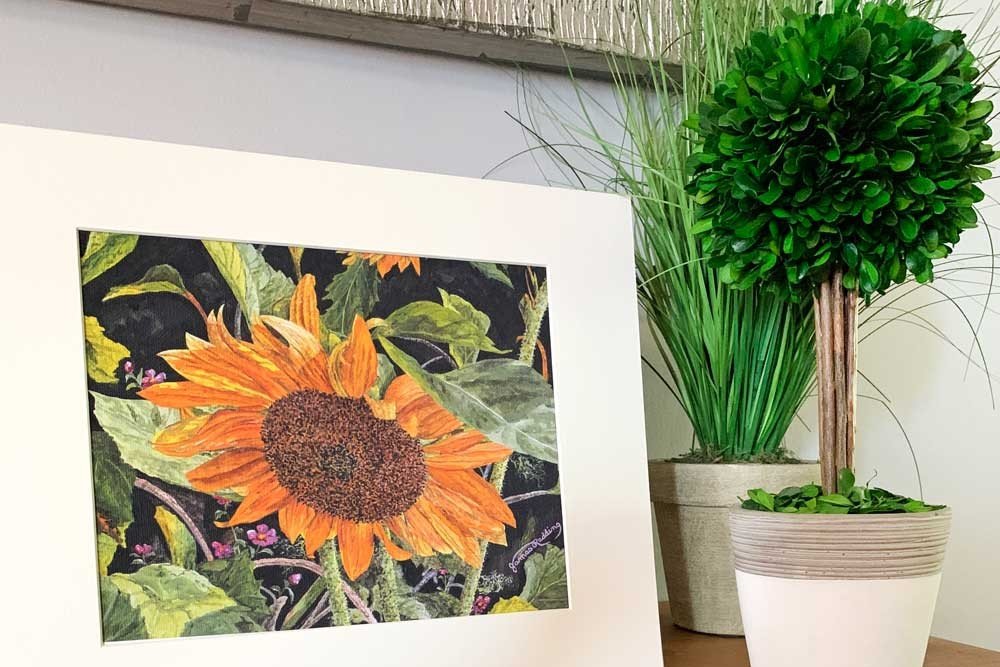
A birthday or a thank you wants something small and personal. Try a matted small work, which fits a standard frame and puts nobody under obligation. That matters more than people admit when they are opening it in front of you.
A milestone is different. Weddings, retirements, the big round anniversaries. Reach for something signed. A lithograph carries the artist’s own hand on the paper, and that small mark in the corner does a surprising amount of work.
For the moments that genuinely matter, you want presence. A canvas giclée arrives ready to hang and holds a wall the way a painting does. A commissioned original goes further again and stops being a present at all. It becomes the thing the family argues over in forty years.
There are options at every level, so let the occasion set the tone rather than the budget.
Practical Details That Save Trouble
Two things trip up otherwise perfect gifts. Framing and timing.
The giclées are printed on canvas and arrive ready to hang, which removes the framing problem entirely. That is worth considering if your recipient is the sort who means to visit a framer and never quite does. Our explainer on what a giclée print is explains how they are made.
Timing catches more people out, usually in December. Lithographs ship within a couple of business days because the studio prints them ahead. Giclées are made to order, so allow around two weeks. Commissions need months. It is also worth checking shipping and returns if the gift is going to an address that is not yours.
When a Commission Is Worth It
Sometimes only one image will do, and no amount of browsing will turn it up.
If the gift is really about a specific house, a particular stretch of land, or a face, a commission is the honest route. The studio handles these personally, and old photographs are usually enough to work from, even the blurry ones. Portraits are welcome alongside landscapes, and you can see examples on the portraits page.
Just start early. A commissioned piece cannot be rushed, and the good ones never are.
Lowering the Risk
Still nervous about giving art as a gift? Reasonable. Two things genuinely reduce the odds of a miss.
Choose a subject rather than a style. Nature scenes sit comfortably in nearly every home, while bold abstract work divides opinion sharply, and you will not find out which way your recipient falls until it is unwrapped. Our guide to art for a calm home explains why quiet subjects travel so well.
Or simply involve them. Some people love choosing their own, and pointing them at the prints pages while offering to cover it takes the guesswork out completely. Less of a surprise, admittedly. But they end up with something they will actually keep, which was the point.
Would you like help matching a piece to the person? Send the studio a note with a little about them, and we will suggest a few options.
Frequently Asked Questions
Is art a good gift?
Art makes an unusually lasting gift, since a piece on the wall keeps giving something back for years. It also shows thought, because choosing a scene means paying attention to what someone loves. Nature subjects suit most homes, which makes them a safe choice.
How much should I spend on art as a gift?
Let the occasion guide you rather than a fixed figure. Something small and personal suits a birthday, while a signed piece marks a milestone. Matted small works start at $49, so you can choose by meaning first and budget second.
What if they do not like it?
Choose a subject rather than a style, since quiet nature scenes divide opinion far less than bold work. Looking at the art already on their walls helps a great deal. Alternatively, let them choose the piece and simply cover the cost.
How far ahead should I order?
Lithographs ship within one to two business days. Giclées are made to order, so allow about two weeks. Commissioned paintings take considerably longer and should be started months in advance.
Should I frame it before giving it?
Ready to hang canvas avoids the question entirely, which helps if the recipient is unlikely to visit a framer. Matted small works fit standard frames, so framing them is inexpensive and easy either way.